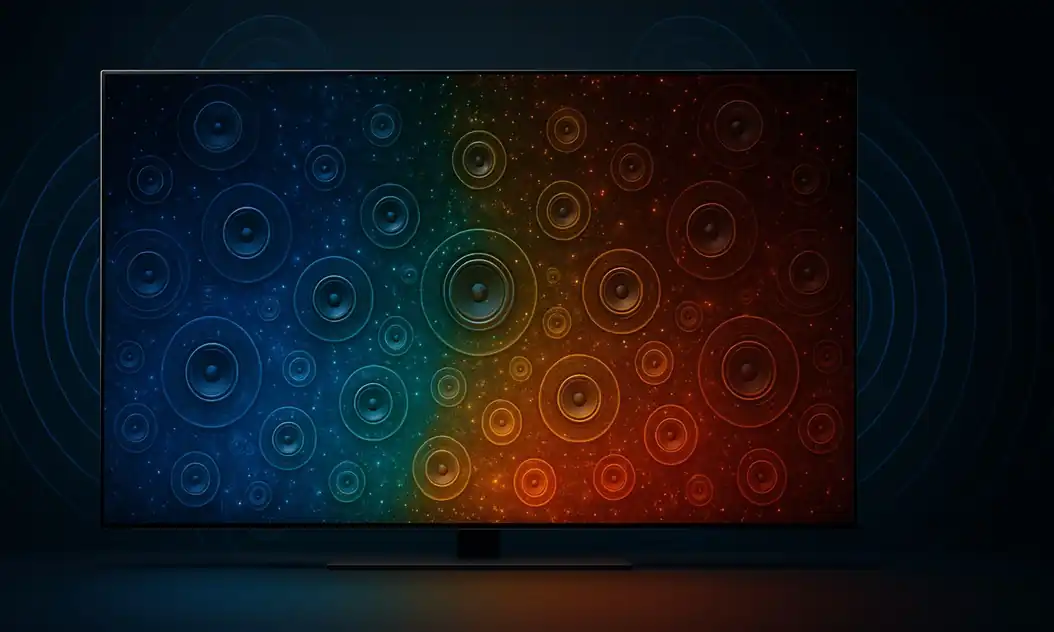
A team has developed the first OLED display with local sound technology based on each pixel emitting its own sound. Imagine if every little light on your screen could emit different sounds at the same time, turning it into an immersive multichannel speaker system.
This technological breakthrough, which was published in the journal *Advanced Science*, is the result of research led by Professor Su Seok Choi and Ph.D. candidate Inpyo Hong, both affiliated with the Pohang University of Science and Technology (POSTECH).
While OLED screens—and others enhanced with quantum dots—have offered improvements in resolution and color accuracy, there was a perceived need for something new that would go beyond visual quality, further enhancing realism and user immersion. As visual technologies reach a stage of consolidation, the integration of multisensory stimuli—such as sight, hearing, and even touch—into screens is emerging as a new frontier for development.
In this sense, screens are no longer merely passive display panels but have become immersive interfaces that engage people’s multiple senses. Among these, sound is the most important, as research suggests that audiovisual synchronization accounts for nearly 90% of perceived immersion.
Sound directly from the surface of the OLED screen
To date, high-quality audio playback has required the use of external soundbars or multiple speakers, which can sometimes be problematic, particularly in spaces where room is limited, such as vehicle interiors. In response to this situation, the research community has focused its efforts on incorporating sound directly into OLED panels.
However, this was challenging because conventional drivers are large and heavy, making it difficult to install multiple units without causing interference or compromising the inherent thinness of OLED technology. Furthermore, crosstalk between the various speakers hinders precise control of localized audio.
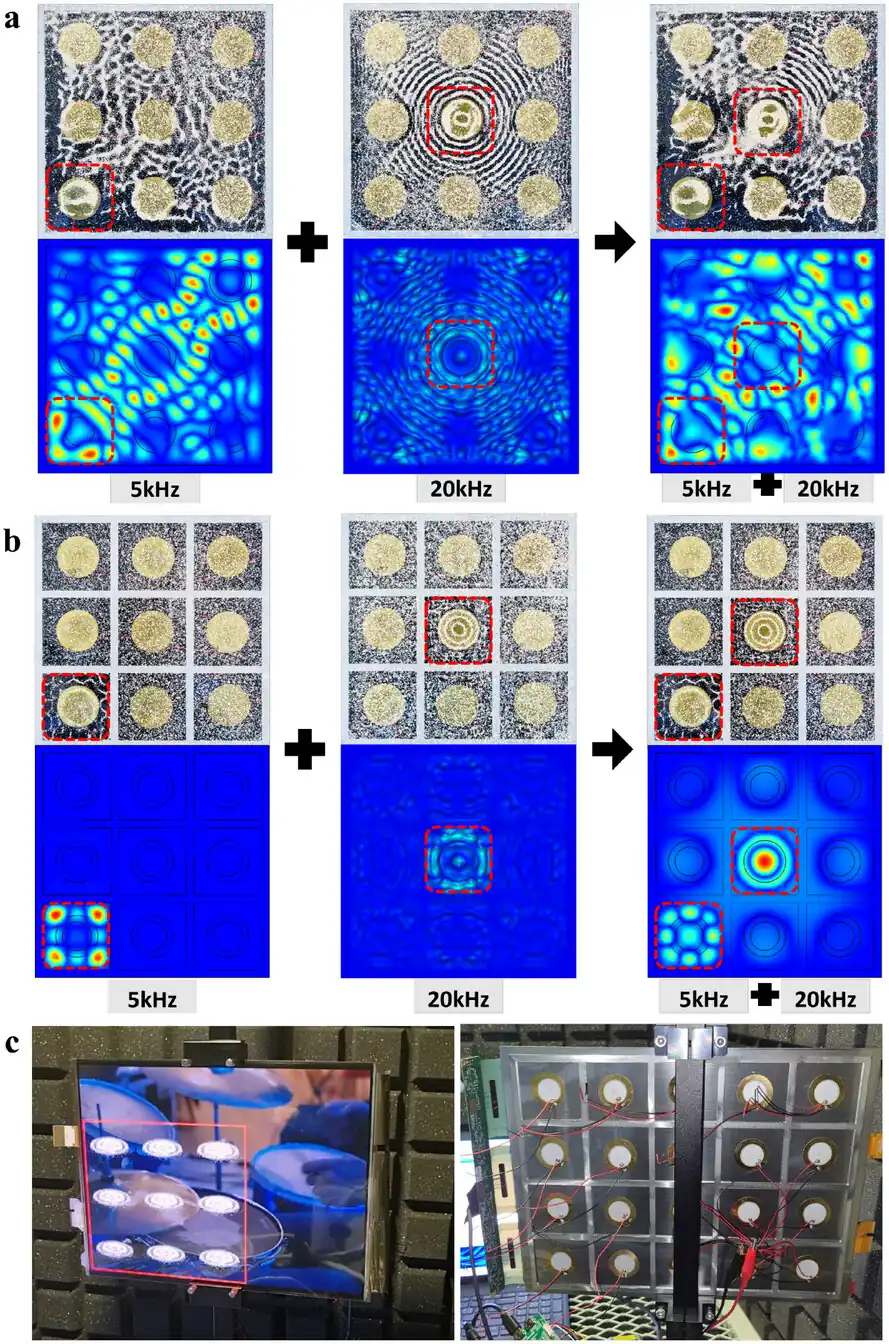
However, the POSTECH team has managed to overcome these obstacles by integrating ultra-thin piezoelectric exciters into the OLED display structure. These drivers, arranged in a manner analogous to the pixels, convert electrical signals into sound vibrations without requiring additional space, making them compatible with the slim profile characteristic of OLED panels.
Custom audio emanating from every pixel
Thanks to this integration, each pixel can function as an independent speaker, enabling pixel-based local sound technology. The researchers also developed a method to completely eliminate sound interference between different areas of the screen—an achievement that was previously unattainable in multichannel setups.
This innovation opens the door to many areas of application. For example, in a car, the driver could receive navigation instructions while the passenger enjoys their music selection, all displayed on the same screen. In the realm of virtual reality or mobile devices, spatial audio could dynamically adapt to the user’s head or hand movements, enhancing realism and immersion.
But it's important to keep in mind that, for now, this technology has only been tested on a 13-inch OLED panel, and it may be more challenging to implement on large panels like those found in today's televisions.