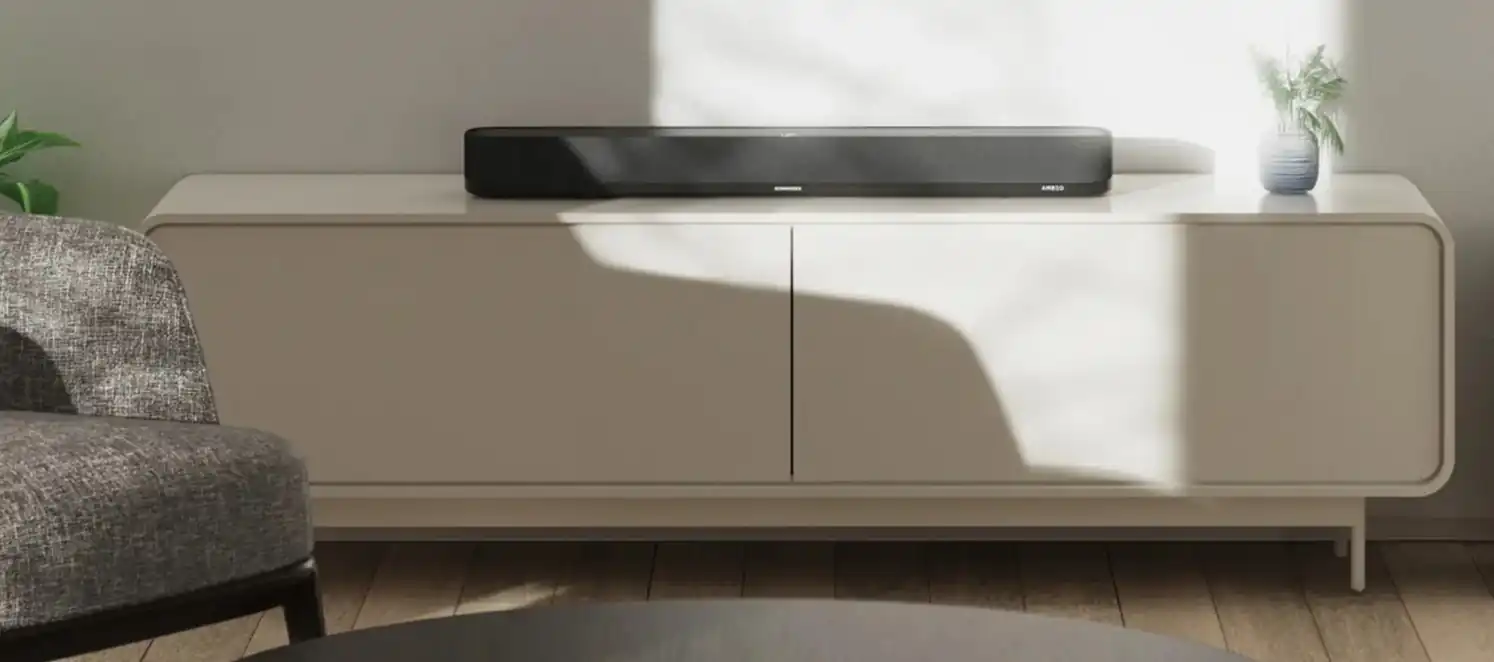
At first glance, the Sennheiser AMBEO Soundbar Mini catches the eye with its compact design, perfect for fitting into any living room without taking up too much space. Despite its small size, it features six speakers that deliver well-balanced sound—a detail we’ll explore further later on. But we can already say that, thanks to its virtualization technology and powerful built-in speakers, every line of dialogue, sound effect, and melody feels immersive and natural.
The good
- Convincing 3D sound (7.1.4 virtualization) with no rear speakers
- Surprising bass for its size – no subwoofer needed
- Clear dialogue and well-defined mids and highs, even at high volume
- Automatic room calibration and very complete connectivity (eARC, AirPlay 2, Wi-Fi)
The bad
- The remote isn't backlit – easy to hit the wrong button in the dark
- Wall mount sold separately (€50)
- Needs HDMI eARC on your TV for top quality
Its versatile connectivity—including HDMI eARC, Bluetooth, and Wi-Fi—allows it to connect to other devices, and it’s also compatible with the most popular streaming services.
Installation and setup are easy thanks to its app. Plus, its smart system adapts to the acoustics of the room where the soundbar is placed, delivering higher quality sound.
Technical Specifications
| Specifications | Details |
|---|---|
| Item Number (SKU) | 700138 |
| Model: | SB02S |
| Amplifier | 6 Class D amplifiers |
| Total Amplification Power | 250 W (RMS) |
| Total number of built-in speakers | 6 |
| Audio processing | 1.8 GHz quad-core SoC |
| Full range | 4 full-range transducers with 1.6” (40 mm) cellulose cones |
| Frequency response | 43 Hz – 20 kHz (-3 dB) |
| Woofers | 2 x 4″ cellulose cone |
| Connectivity | Built-in Chromecast, uPnP, AirPlay 2, Spotify integration, Tidal integration |
| HDMI TV OUTPUT (eARC) | 1 x HDMI eARC (HDMI 2.1) |
| USB | 1 x USB port (Type A), for powering accessories (external devices): 5 V ⎓, 1 A |
| Microphone input for room calibration | 4 high-precision far-field microphones |
| Dimensions (with feet) | 70 x 6.9 x 10.1 cm |
| Dimensions (without feet) | 70 x 6.7 x 10.1 cm |
| Weight | Approx. 3.3 kg |
| Network transmission system | 2×2 MIMO |
| Transmission frequency (country-specific) | 2,400 MHz to 2,483.5 MHz 5,170 MHz to 5,835 MHz |
| 2.4 GHz band network modulation | CCK, DQPSK, DBPSK for DSSS, 64QAM, 16QAM, QPSK, BPSK for OFDM |
| 5 GHz band network modulation | 1024-QAM, 256-QAM, 64-QAM, 16-QAM, QPSK, BPSK |
| Network output power | 100 mW (maximum) |
| Wi-Fi standard | IEEE 802.11 a/b/g/n/ac/ax |
| Bluetooth version | 5.0 Classic/BLE |
| Bluetooth to Sub wireless transmission | 5.2 Bluetooth Low Energy |
| Bluetooth Transmission Frequency | 2,400 MHz to 2,483.5 MHz |
| Bluetooth modulation | GFSK, 4-channel DQPSK, 8 DPSK |
| Bluetooth Profiles | A2DP, AVRCP, and GATT |
| Bluetooth output power | BT SOC: 10 mW (maximum) BT Sub: 10 mW (maximum) |
| Bluetooth codec | BT SOC: AAC, SBC BT Sub: LC3 |
| Voltage range | 100–240 V ~50/60 Hz |
| Current | Max. 2.5 A |
| Standby power consumption | Max. 1.9 W |
| Temperature range (during operation) | 0 °C to +40 °C Storage: -20 °C to +70 °C |
| Relative humidity | 10% to 90% |
Packaging
The Sennheiser AMBEO Soundbar Mini comes in a natural cardboard box with a handle that makes it easy to carry and adds a practical touch to the packaging.
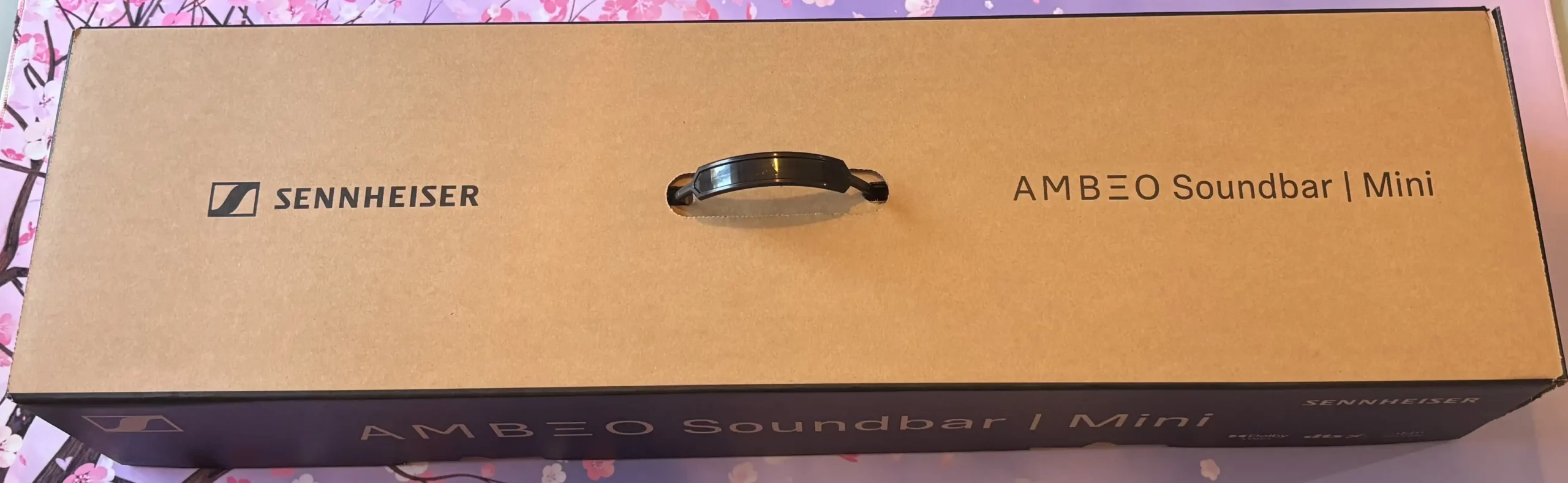
The top of the box features the Sennheiser logo and the name “AMBEO Soundbar | Mini,” printed in a simple yet eye-catching style.


On the front and back, the background is black, with the brand and model name taking up the entire central area, making it easy to identify the product. In the corner, the supported technologies are listed: Dolby Atmos, DTS:X, and MPEG-H Audio, highlighting its immersive audio capabilities.
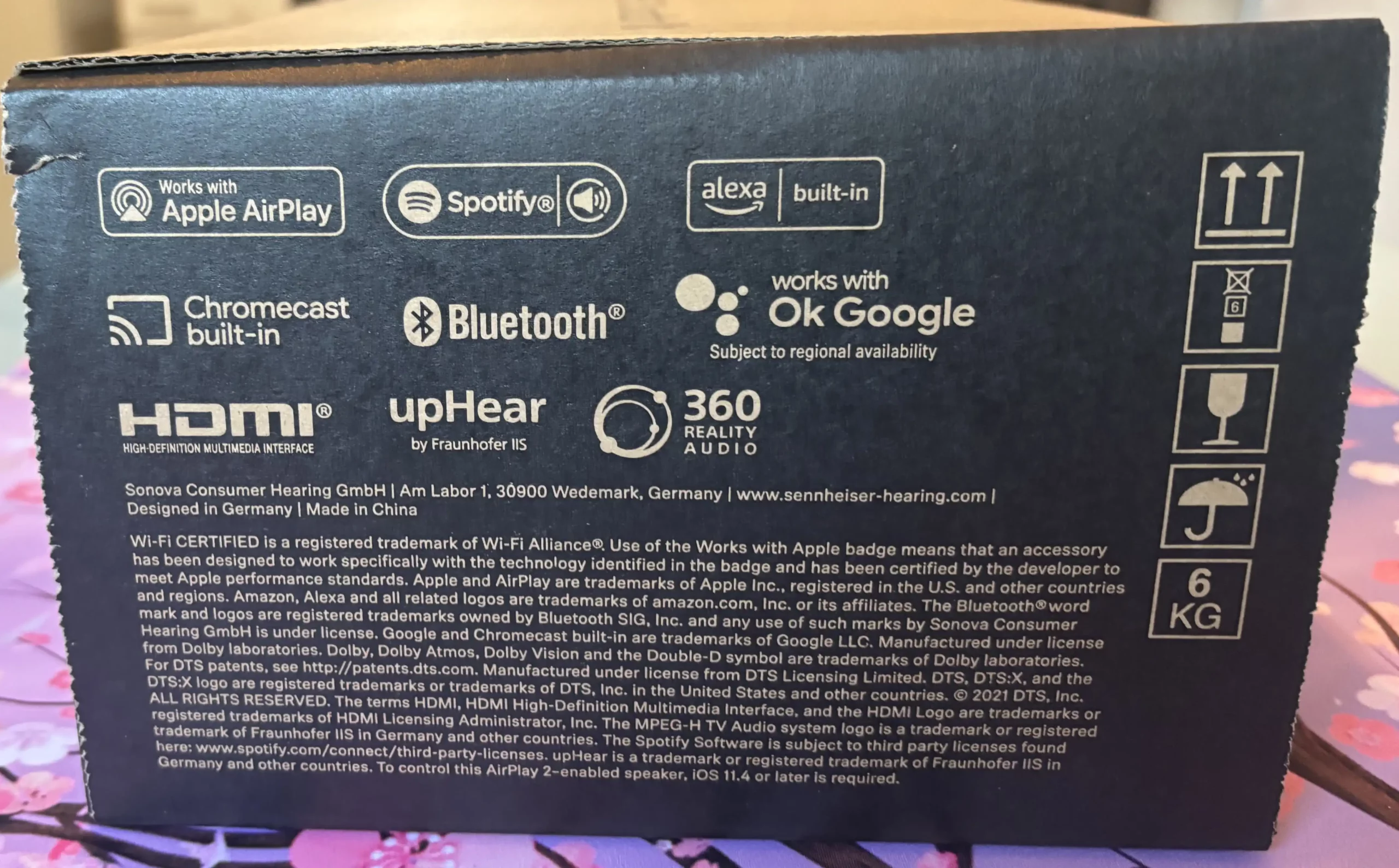

On one of its sides are icons representing all the technologies it supports (Apple AirPlay, Spotify, Alexa, Chromecast, Bluetooth, OK Google, HDMI, upHear, and 360 Reality Audio), which gives a good first impression of just how comprehensive the soundbar is in terms of connectivity.
On the other side, you can see information about its weight (6 kg) and the model number, while the back features the certification seals and the safety standards it meets. This is useful for those who want to make sure it meets the necessary standards, especially if it will be used in different regions or with other devices.
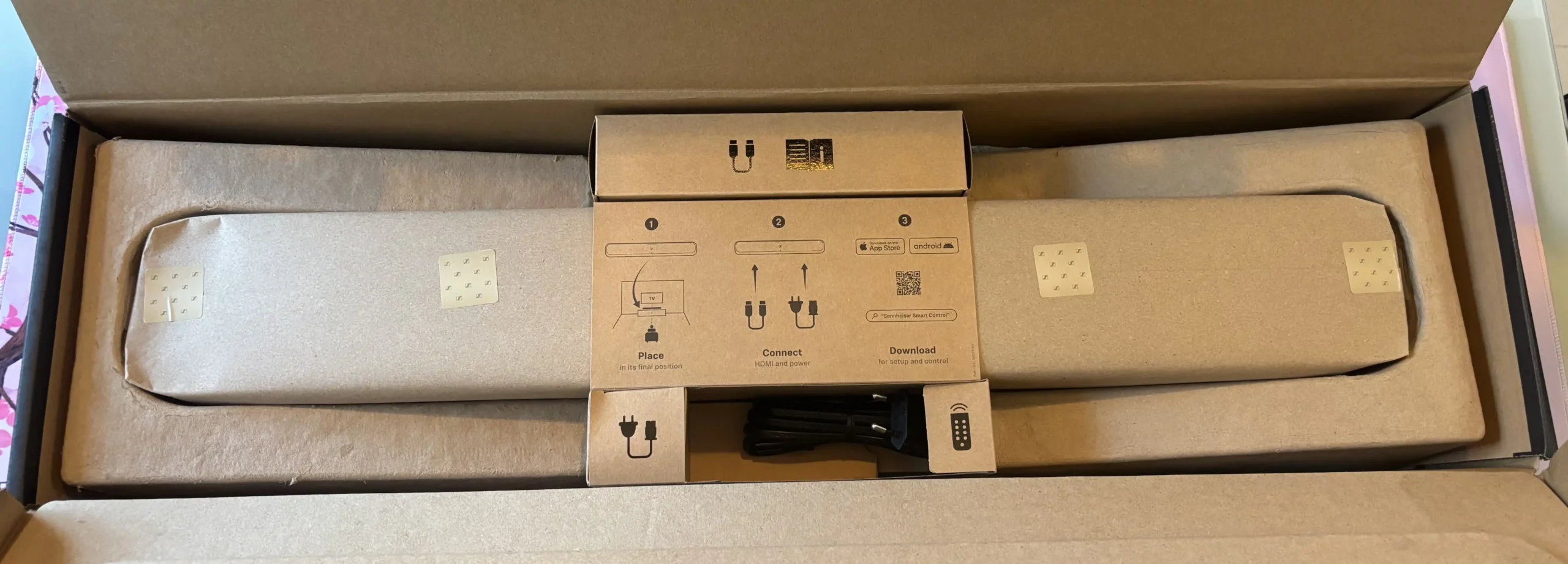
When you open the box, you’ll notice a very well-organized interior. The soundbar is secured within a cardboard frame that keeps it stable to prevent damage during shipping. It’s also wrapped in flexible cardboard to prevent scratches and keep dust out. And on top of that is a small compartment containing the accessories: the power cord, HDMI 2.1 cable, remote control, and documentation. Plus, everything is clearly labeled with a small quick start guide, so there’s no risk of confusion when setting it up.
We can say that the packaging conveys a sense of elegance, quality, and attention to detail—something that is very much in line with what is expected of Sennheiser.
Contents of the box
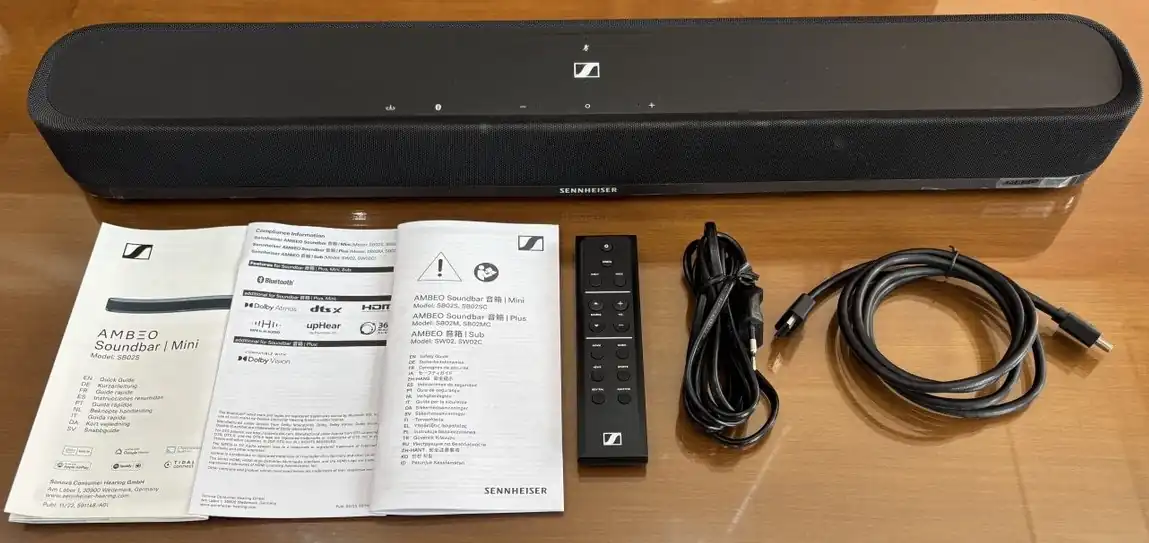
When you unpack the bar, you’ll find:
- Sennheiser AMBEO Soundbar Mini
- Power cord
- High-Quality HDMI 2.1 Cable for eARC
- Remote control
- A quick guide providing information to help you easily install and set up the product.
Sennheiser AMBEO Soundbar Mini
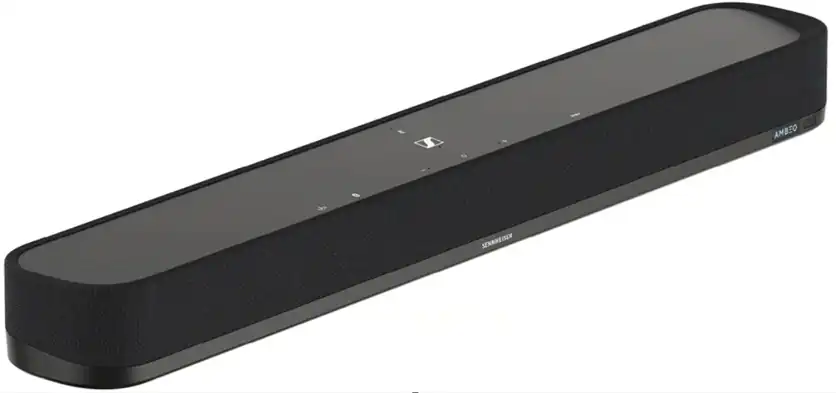
The Sennheiser AMBEO Soundbar Mini is a compact soundbar that retains the DNA of the AMBEO line but in a smaller size. Measuring 70 x 6.9 x 10 cm and weighing 3.3 kg, it can be placed on any TV stand or even mounted on the wall—though this requires the Sennheiser AMBEO Soundbar | Plus and Mini Wall Mount, which is not included. Although this accessory costs 50 euros, it’s recommended to save space and maintain a cleaner, more organized look in your living room.
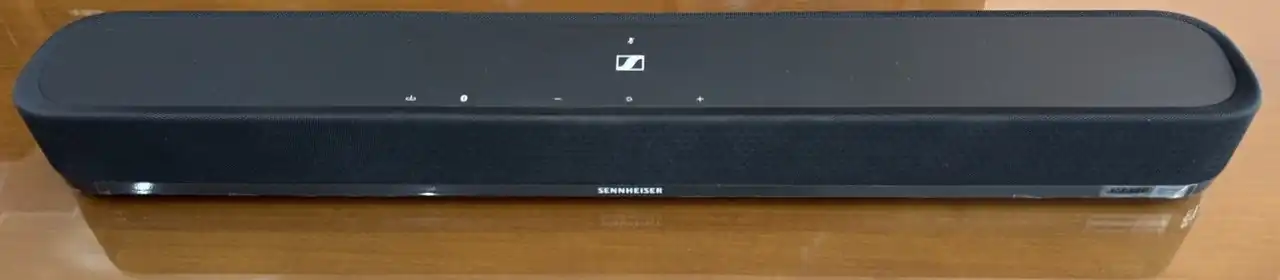
It has an elegant appearance, with a matte black finish that prevents glare and fingerprints. The body of the bar is made of high-quality materials and features a sturdy structure that conveys a sense of solidity.
On the front and sides, a perforated grille protects the speakers without affecting the acoustics. There are no moving parts in the enclosure, which contributes to its durability and solid build quality.
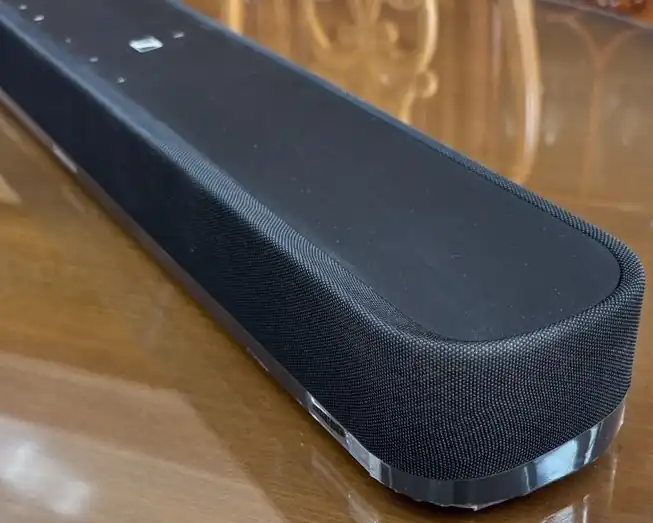
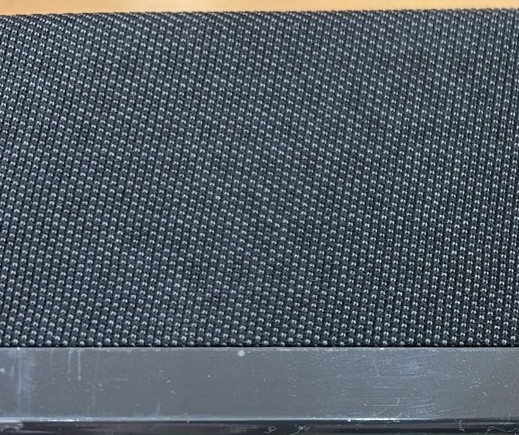
Despite its compact size, it features four 1.6-inch full-range speakers and two passive woofers, designed to deliver deeper bass without the need for an external subwoofer. These are strategically positioned to deliver a virtual surround sound effect using AMBEO technology.
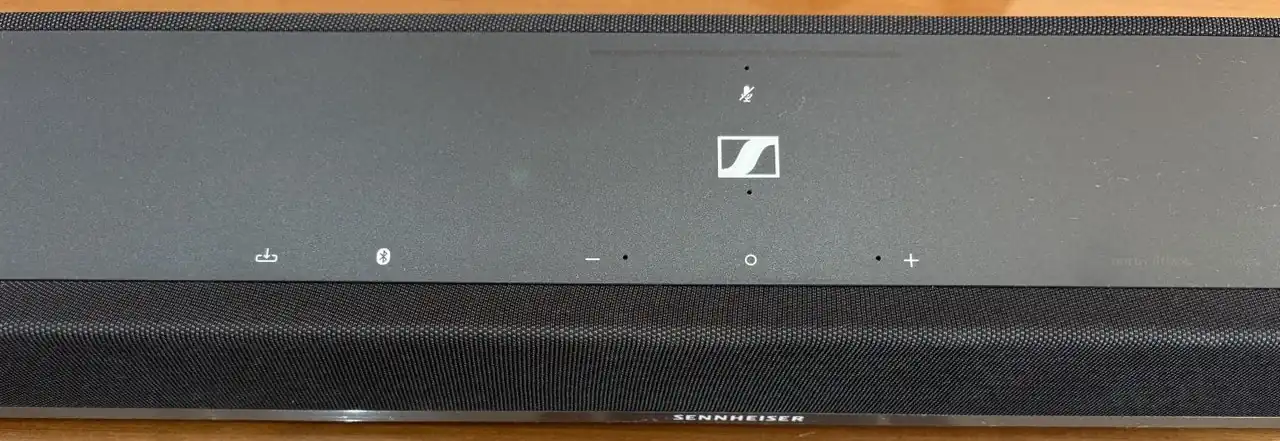
At the top of the bar are touch buttons for selecting the audio input source, a button to enable Bluetooth synchronization, volume controls, and a button to activate AMBEO mode. There is also a touch button to mute the microphone when you’re not using the virtual assistant for voice control. Additionally, there are four microphone ports for calibration.

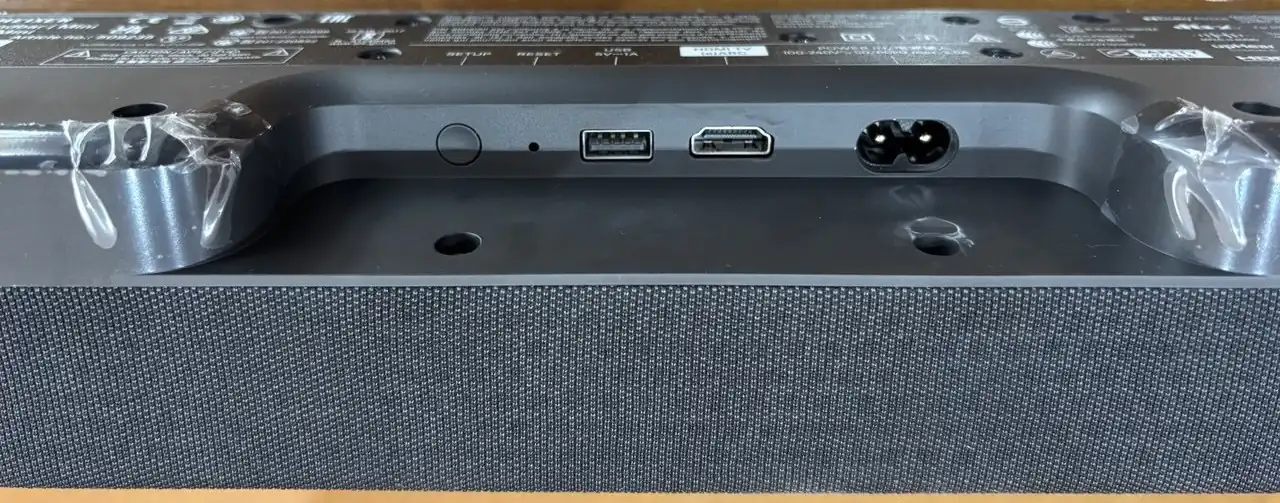

On the back, you’ll find the power cable connections, the HDMI eARC port, a USB Type-A port, the power button, and the reset button.
A couple of things need to be clarified here:
The USB Type-A port is not designed to connect the soundbar to a PC for use as speakers. You can connect it, but it is intended for updates and maintenance of the soundbar and should only be used by Sennheiser’s technical support team. However, it can be used to power other devices, such as a cell phone or a device connected via Bluetooth, allowing you to charge those devices while using them with the soundbar.
As for the HDMI eARC port, most current TVs have this port, labeled “eARC.” However, if your TV does not have an eARC port and only has standard HDMI ports, you will not be able to connect the AMBEO Soundbar Mini to the TV via HDMI to stream audio at the highest quality. HDMI eARC is designed to ensure lossless audio transmission, while also allowing you to output audio exclusively through the HDMI eARC port while using a standard HDMI port as the video source—such as a Fire TV Stick.
As for the remote control, it feels functional and sturdy in your hand. It has multifunction buttons, an AMBEO on/off button, night mode—which reduces volume peaks during loud sounds—and voice mode —which improves dialogue clarity by boosting vocal frequencies—switching the audio source, and adjusting the volume, as well as buttons for selecting preset sound modes for movies, music, news, sports, neutral, and adaptive.
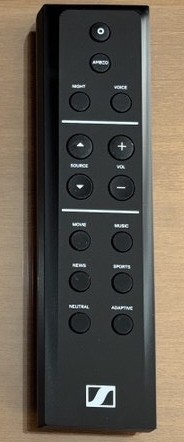
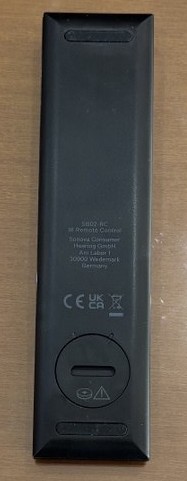
The remote itself includes everything you’d expect to control the soundbar. But I would have particularly liked some kind of backlighting on the buttons, since at night, in low light, and without knowing all its functions, it’s easy to get confused and press the wrong button.
Sennheiser Smart Control App and Setup
In my opinion, although it isn’t strictly necessary, the Sennheiser Smart Control app is essential for getting the most out of the Ambeo Soundbar Mini. From the moment you plug in the soundbar, the app will automatically detect it and guide you through the setup process. It’s simple and has an intuitive interface. The firmware update runs automatically, though you can manually check for new versions.
One of the most notable features is the room calibration, which uses the four microphones built into the soundbar to precisely analyze the room’s acoustics. This process, which takes a couple of minutes, analyzes the room’s acoustics and adjusts the sound accordingly, including the placement of the “phantom speaker” and the frequency balance.
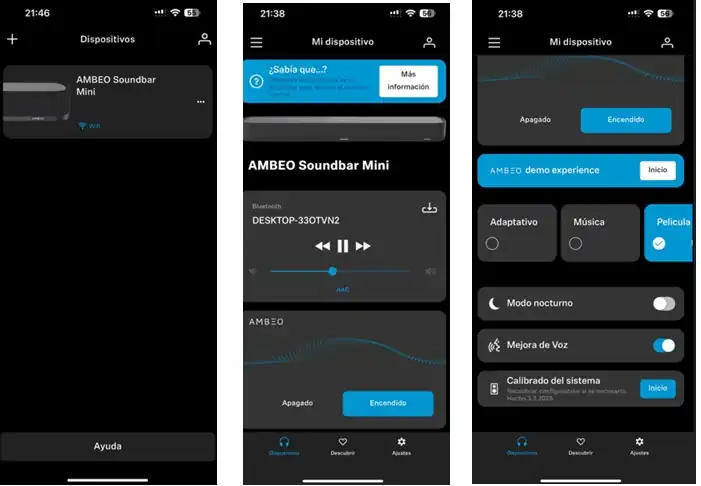
From the home screen, you can adjust the volume, fine-tune every detail of the equalizer, turn Ambeo mode on or off, start surround sound demos, and choose from various preset modes such as sports, music, movies, and news.
As for Ambeo mode, you can adjust the Ambeo 3D sound levels by choosing between Light, Normal, or Boost modes. The latter further expands the sound, creating a sense of spatiality that some users will find appealing.
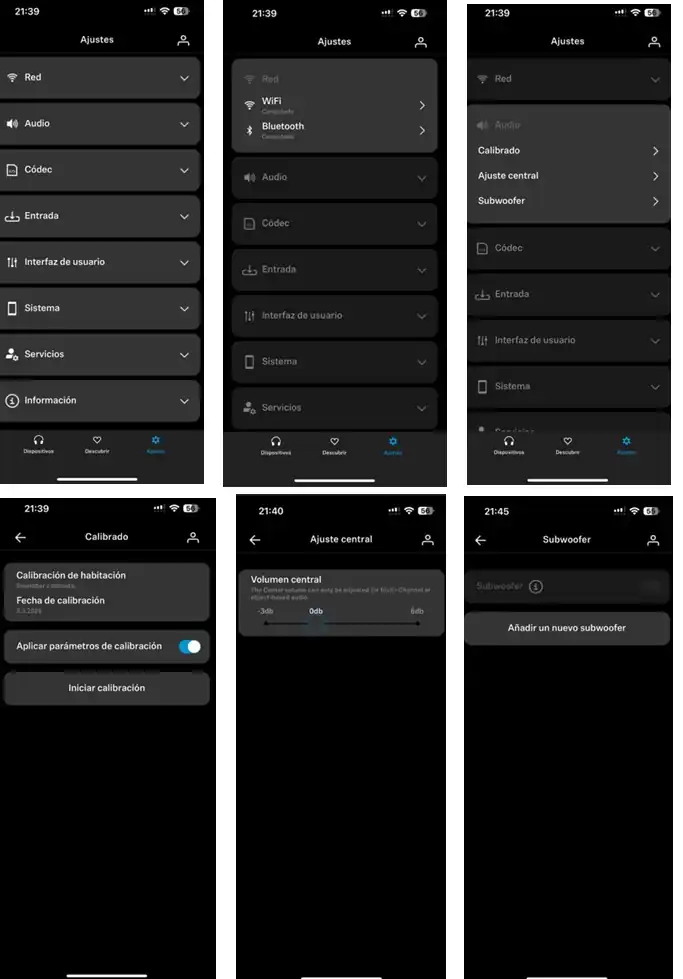
It also includes a Night Mode, which reduces bass levels to avoid disturbing you at night, and a Voice Enhancement option, designed to highlight dialogue without having to turn up the volume. In addition, from the app you can manually adjust lip-sync and modify the brightness of the LEDs, as well as manage Bluetooth and Wi-Fi connections.
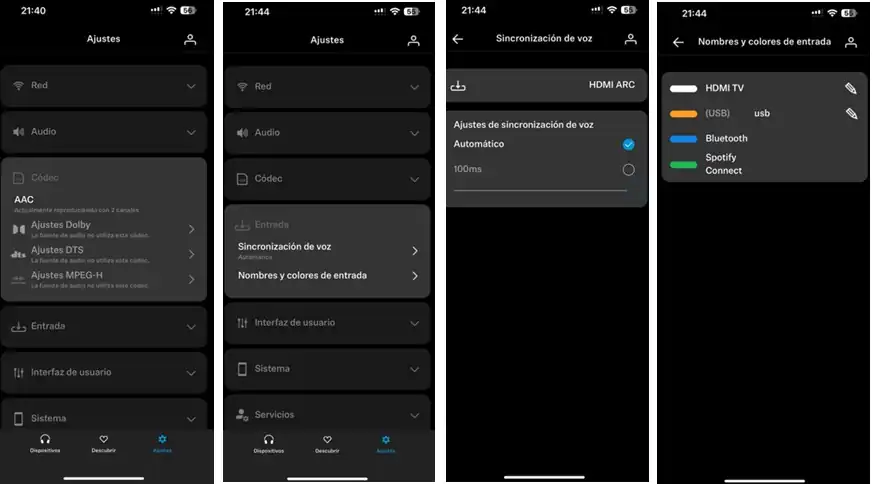
It also allows you to manage Bluetooth connections and, with the integration of technologies such as Apple AirPlay 2, Spotify Connect, Tidal Connect, Amazon Music, and Google Chromecast, it simplifies connecting to a Wi-Fi network, eliminating the need for manual setup and even allowing you to pair up to four subwoofers, expanding your customization options. Of course, you can also play music from an iPhone in a matter of seconds.
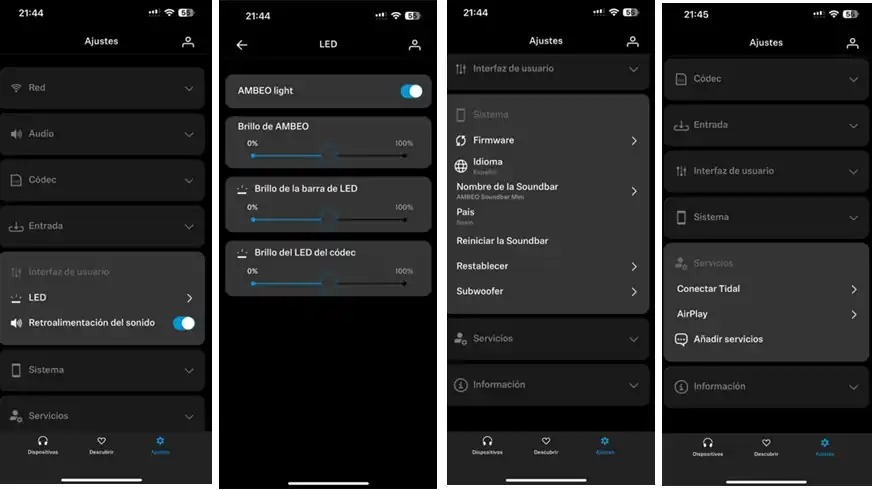
Finally, the app supports the Amazon Alexa voice assistant, which can be activated from within the app. However, when you enable Alexa, the function of the multifunction button on the remote control—the top button with the “O” icon—will change. Without Alexa enabled, the button is used to mute the sound or pause the music, while with Alexa active, it becomes a shortcut for voice commands.
Exams and Final Evaluation
The Sennheiser Ambeo Soundbar Mini, priced at 660 euros, is an exceptional audio option for small spaces, proving that its compact size does not mean compromised sound quality.
Its design incorporates two side-mounted and two center-mounted full-range drivers, each 5 centimeters in diameter, along with two 10-centimeter subwoofers that, despite their size, are capable of delivering surprising bass output.
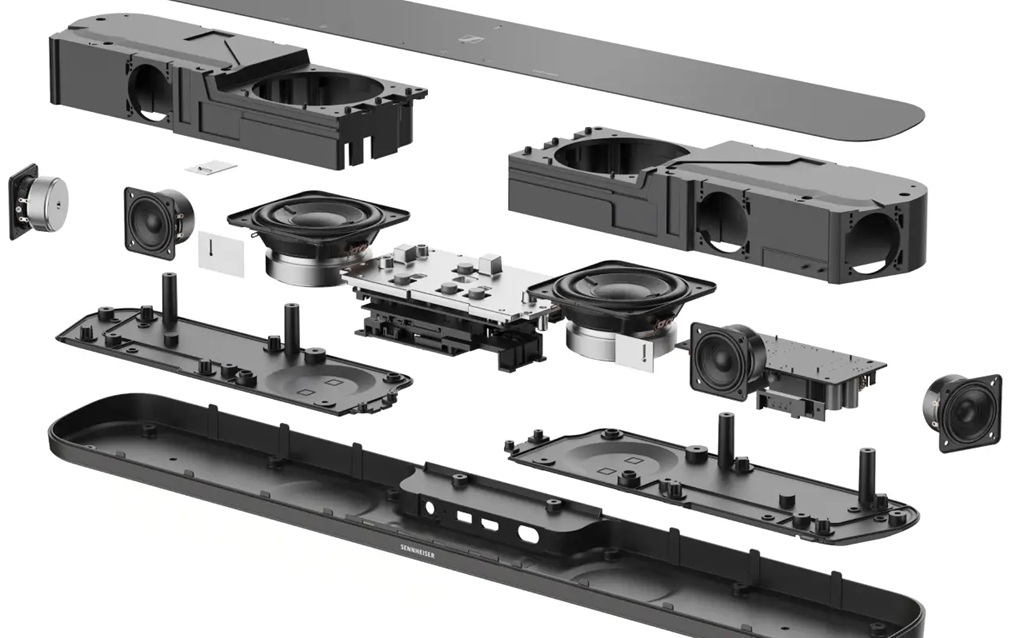
The unit covers a frequency range from 42 to 20,000 hertz, and its six Class D amplifiers, which deliver a total of 250 watts RMS, provide extraordinary power for its size, demonstrating engineering designed to maximize audio performance in formats such as Dolby Atmos, DTS:X, MPEG-H, and 360 Reality Audio.
The inclusion of its specialized algorithms facilitates the playback of uncompressed content, using lighting to indicate the presence of Dolby Atmos or DTS:X, as well as the activation of the Ambeo enhancer. In addition, using virtualization techniques, the system simulates a 7.1.4-channel setup, creating a sense of spaciousness that transcends the limited number of physical speakers, even without separate surround speakers. This feature is crucial when playing both movie soundtracks and music tracks, highlighting the subtle manipulation of psychoacoustics to deliver bass that exceeds what conventional parameters might suggest.
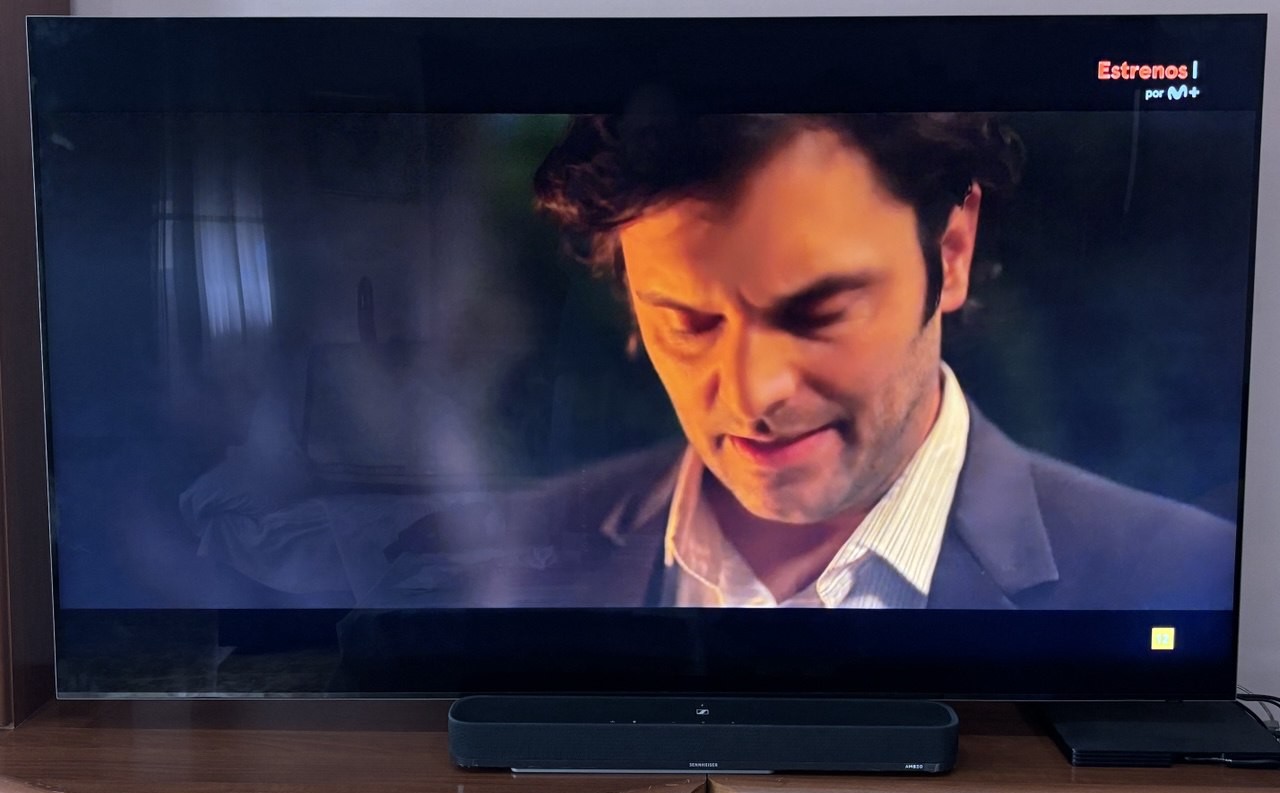
When connected via HDMI (e)ARC, the Ambeo Mini integrates seamlessly with the TV. During testing, the soundbar impressed me in action scenes—where the three-dimensional distribution of sound effects was evident—and in music playback, ranging from classical performances, such as the 1959 soundtrack to Ben-Hur soundtrack and Ray Lynch, to modern productions, without losing any of the nuances in the midrange or treble.
When comparing the playback of 5.1-channel tracks with that of stereo tracks without virtualization, it was observed that enabling Ambeo processing is essential for achieving the spatial breadth and separation that characterize this soundbar.
Its clarity in reproducing dialogue and the definition of midrange and high frequencies remain at very high levels, allowing every nuance—in both music and soundtracks—to come through clearly even at high volumes.
Furthermore, thanks to the system’s versatility, the “Movie” mode provided a sense of spaciousness that enhanced certain scenes, while the “Music” and “Neutral” modes allowed for greater precision in more intimate listening experiences. The soundbar also delivered bass with sufficient definition, suggesting sophisticated control over the sound response.
The ability to adjust the four-band equalizer through the Smart Control app expands your customization options.
During action scenes, such as in *Top Gun: Maverick* or the opening sequence of *Blade Runner 2049*, the soundbar proved capable of distributing the audio in three dimensions, making each frequency transition feel precise and well-localized, even making sounds seem to come from the sides and even from above. However, at certain times it was necessary to activate dialogue mode to enhance the clarity of conversations in scenes accompanied by a lot of sound effects.
Wireless connectivity, tested with AirPlay and Bluetooth, demonstrated that the soundbar is versatile in receiving content from various sources. In particular, AirPlay preserved the original audio quality. Integration with voice assistants, such as Alexa, worked seamlessly, allowing for smooth control of the system and providing convenient and precise management.
In conclusion, tests conducted with the Sennheiser Ambeo Soundbar Mini show that, despite its small size, it’s a system capable of delivering three-dimensional, high-fidelity sound reproduction, with sound separation and dialogue clarity that set it apart from any other compact soundbar. And while an external subwoofer—such as the AMBEO Sub, which is designed for this purpose—may be required for very large spaces, for the vast majority of homes, you won’t need a subwoofer, and you’ll be blown away by the quality and power of the Ambeo Soundbar Mini. For all these reasons, we recommend this soundbar and are also awarding it our Performance Award for its quality and power.