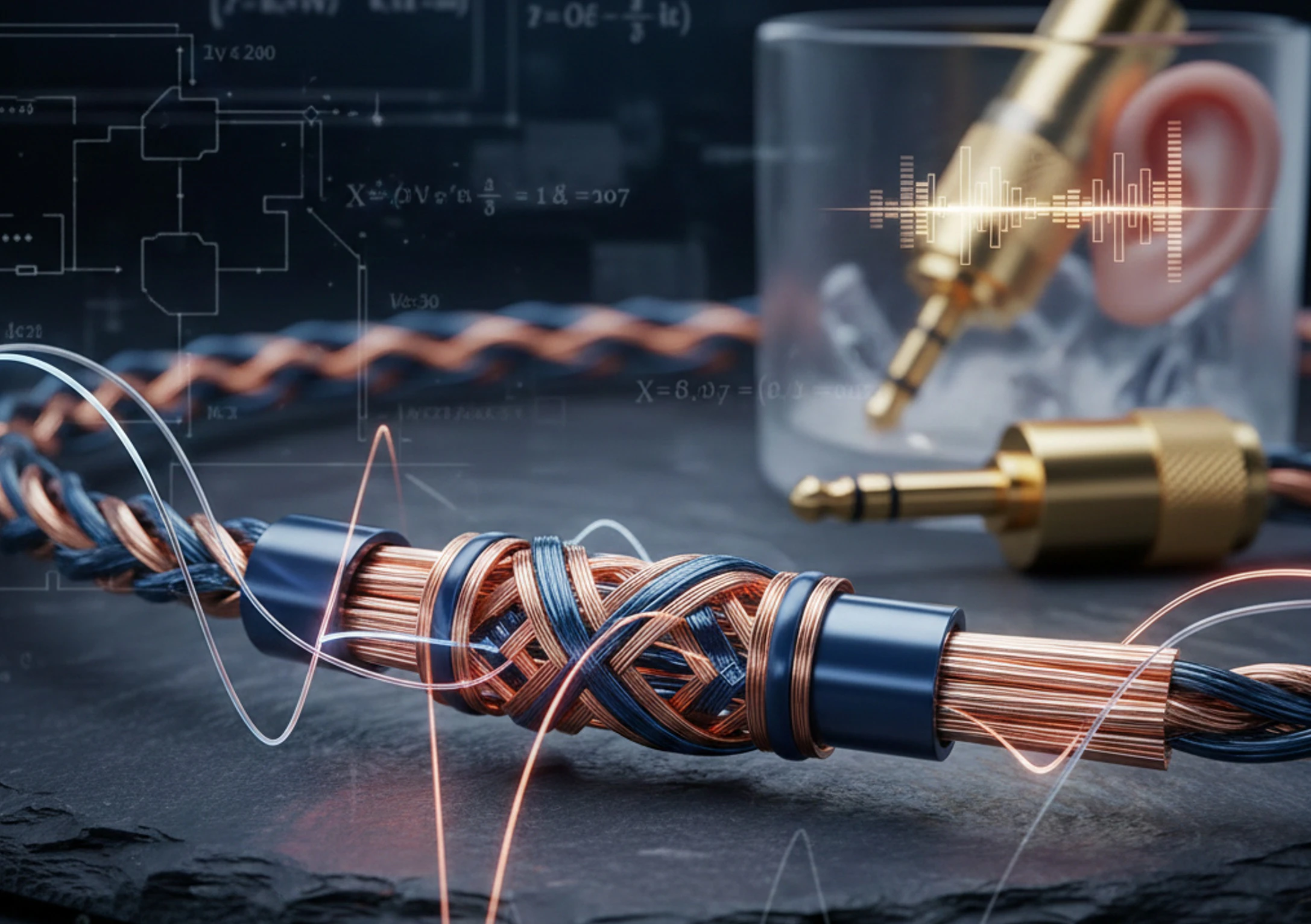
The design of Hi-Fi audio cables combines engineering principles with artisanal craftsmanship; although they may appear to be simple conductors on the outside, behind the scenes there are technical decisions regarding materials, geometry, and assembly that aim to preserve the signal from the source to the speaker.
Manufacturers examine electrical variables—resistance, capacitance, and inductance—and mechanical characteristics such as corrosion resistance, flexibility, and vibration response. For the audiophile, the goal is to ensure that no link in the chain introduces coloration or extraneous noise; for engineers, it is to evaluate each parameter using measurable and repeatable criteria. In this regard, common materials such as copper and plastic insulation coexist with more sophisticated solutions like silver-plated conductors, low-dielectric-constant materials, and multilayer shielding.
Materials and Conductivity of Hi-Fi Cables
As for the conductor, there is oxygen-free copper (OFC) and higher-purity varieties, which are used for their stability and ease of manufacturing, not because they significantly increase conductivity in the audible range compared to standard copper.
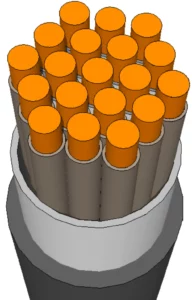
We also use silver, which offers slightly better resistivity, but that advantage is only significant at frequencies much higher than those used in audio; in the audible range, the current flows through the entire cross-section of the conductor, and the silver-plated outer layer does not affect the transmission.
At the same time, Litz wire is mentioned in technical literature as a solution to skin effect and proximity effect, but its benefits are typically evident in RF ranges or in large-gauge conductors; in most interconnects and speaker cables used in home environments, its electrical utility is marginal.
Insulation, Shielding, and Geometry
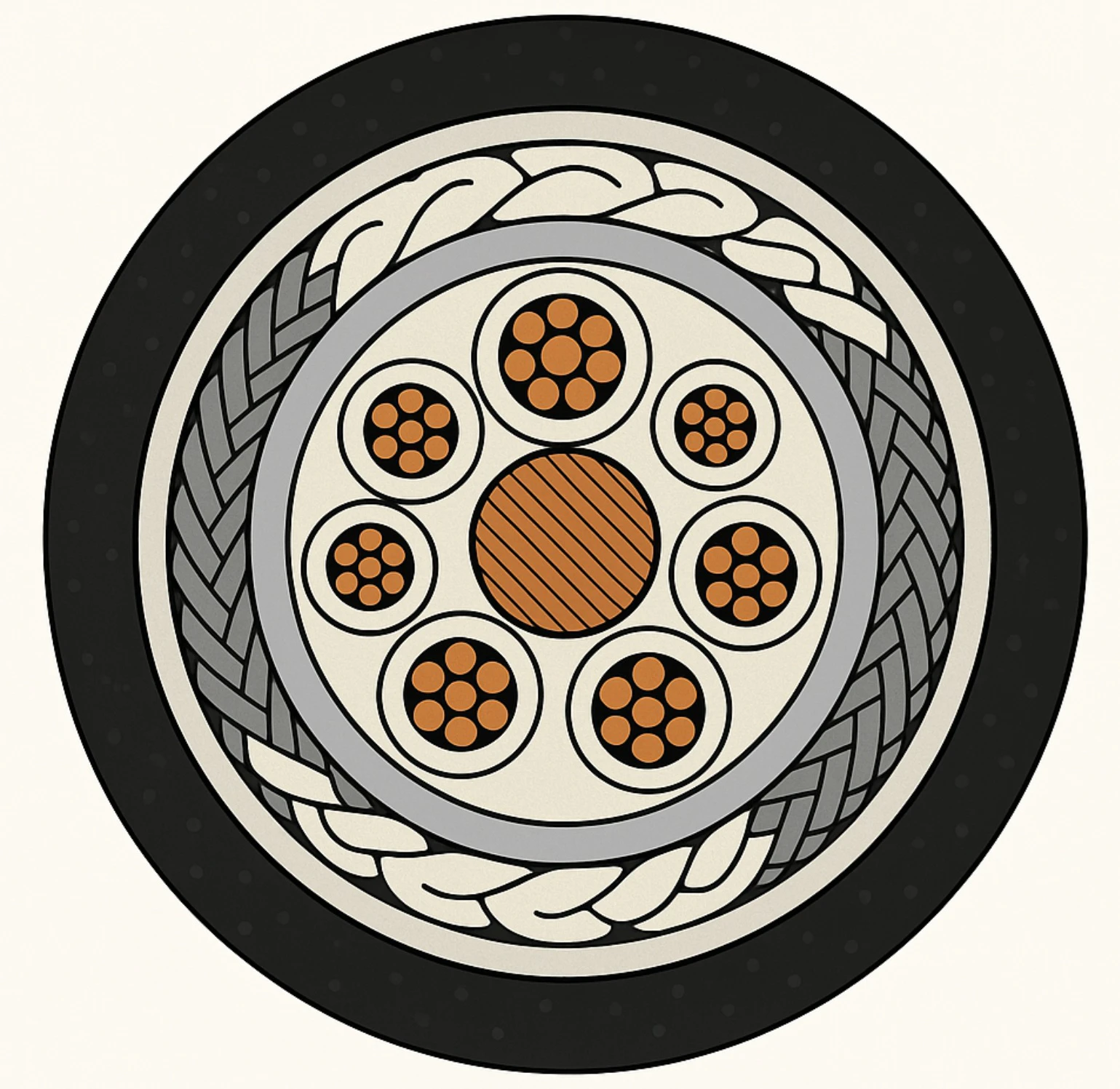
The dielectric surrounding the conductors determines the capacitance and affects high-frequency attenuation. PTFE and foamed polyethylene offer low dielectric constants that reduce the ability of the wires to store charge and, therefore, help preserve the upper end of the spectrum.
The shielding controls external electrical interference: a dense braid protects against low-frequency fields, while a foil is effective against radio interference.
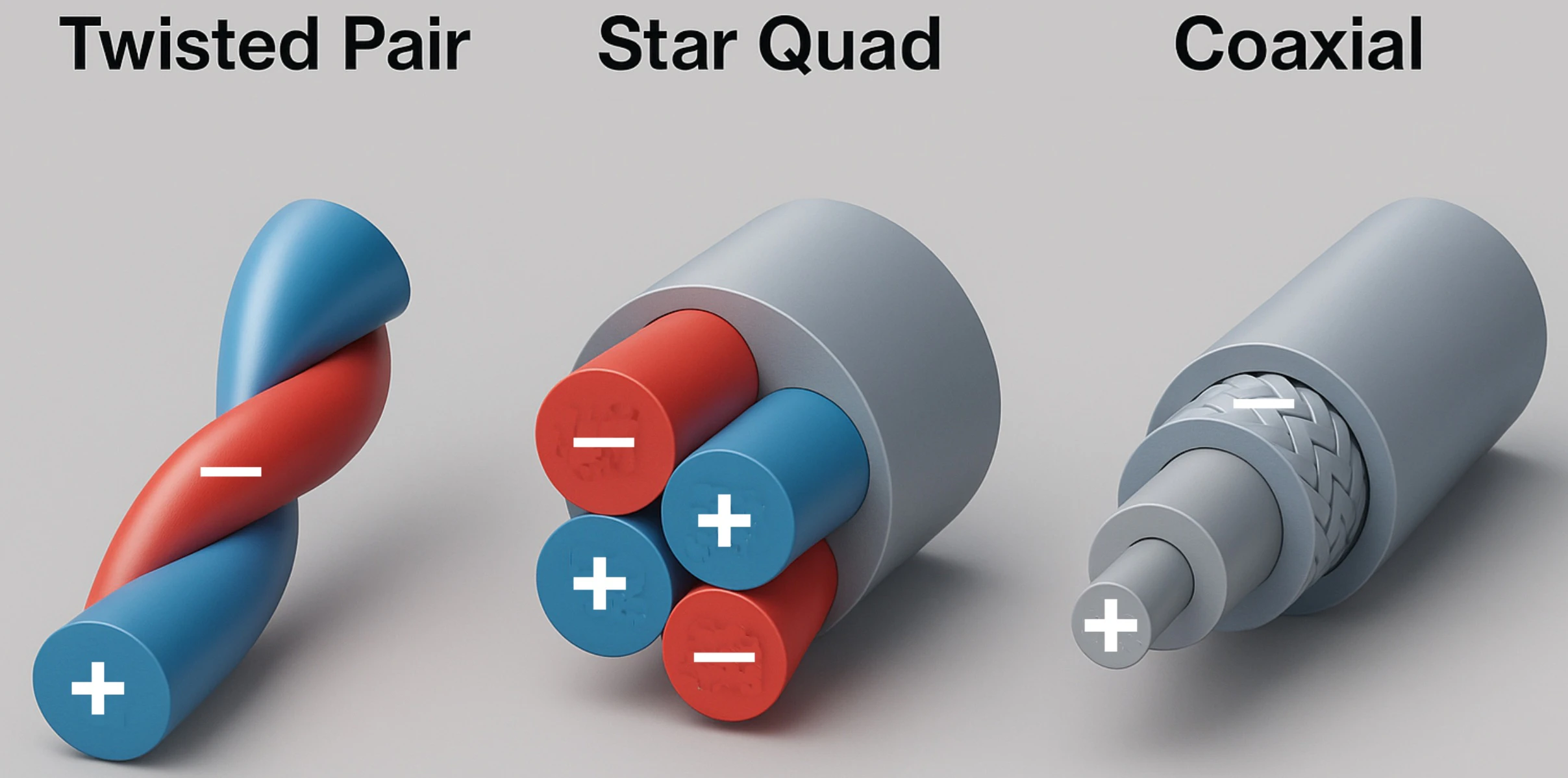
The conductor configuration—twisted pair, Star Quad, coaxial—affects inductance and noise rejection. Star Quad designs, with four intertwined conductors, are common in audio studios and other professional settings because they balance the signal and reduce noise pickup. There is no one-size-fits-all solution; each geometry has a specific relationship between capacitance and inductance that designers adjust according to the intended use.
Connectors, Treatments, and Mechanical Control
Contact points deserve just as much attention as the conductors. Gold or rhodium plating prevents them from oxidizing and ensures a stable connection.
Exoteric treatments such as cryogenics can alter the mechanical properties of certain alloys, but there is no convincing evidence that they improve electrical conductivity in noble metals to a degree that affects hearing.
Another aspect that is sometimes overlooked is microphone feedback: the vibrating cable transmits mechanical modulations to the signal. That is why some designs incorporate absorbent padding to dampen resonances.
Aesthetics, Brand, and Price
Beyond construction, appearance, finish, and packaging are all part of what high-end manufacturers offer. Woven covers, textured jackets, and custom finishing options account for part of the cost, along with manual labor and quality control.
Sometimes, their advertising mixes technical specifications with arguments aimed at appealing to the buyer’s desires; it’s up to the interested reader to separate the measurable characteristics from the rhetoric. That said, there are very capable cables at more affordable prices, as well as premium alternatives that cater to aesthetic or tactile preferences. Ultimately, the decision comes down to technical requirements, budget, and personal taste.