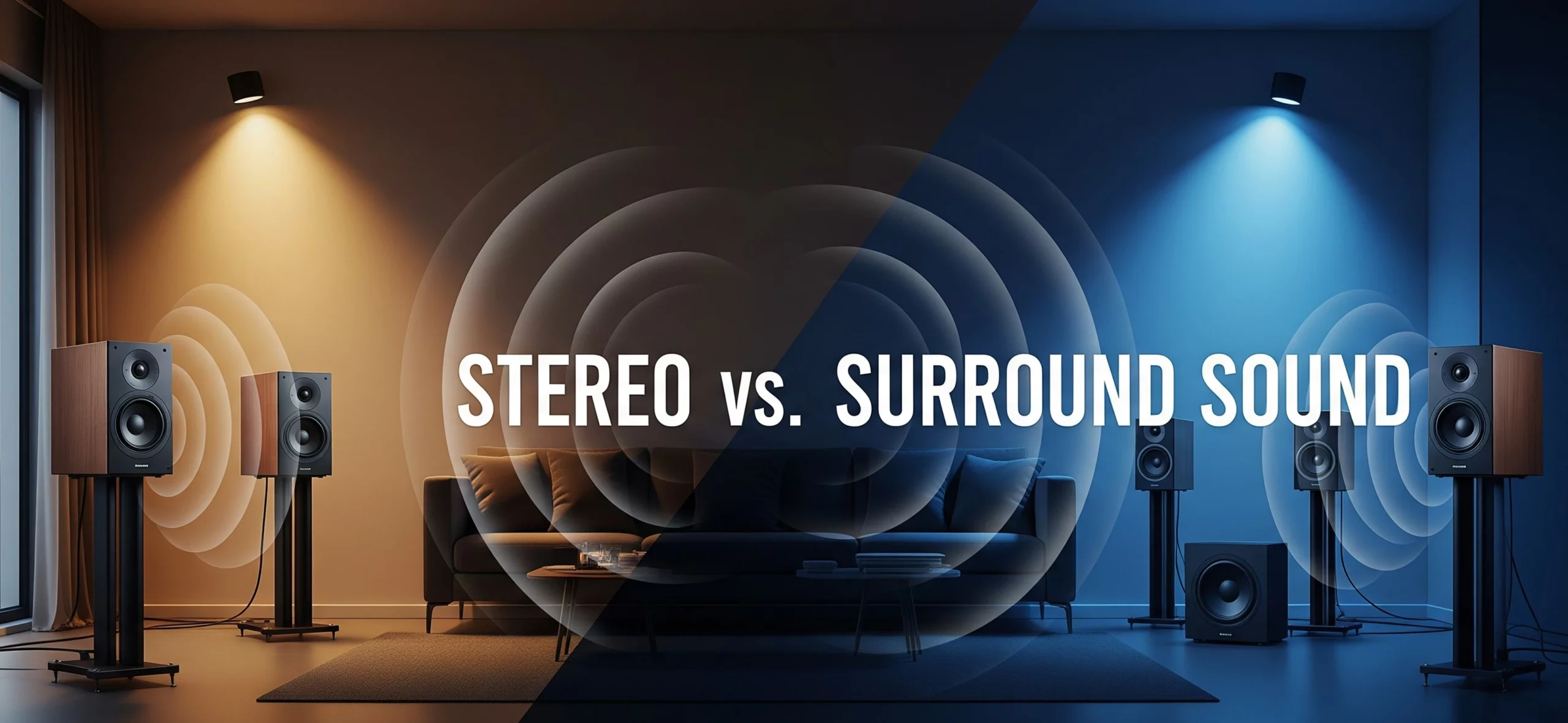
Surround sound is now the standard for many home theater setups, but it isn’t always the best solution. After testing various configurations and calibrations, what’s clear is that a good stereo system—two well-positioned channels plus a decent subwoofer—offers an immersive sound experience that, for the vast majority of people, rarely falls short of multichannel systems.
The reason is that in an acoustically treated room with an appropriate volume level, the left/right separation and tonal coherence allow you to hear dialogue, sound effects, and soundtracks with clarity and richness. If the goal is to watch a movie without distractions and with high fidelity, stereo does the job admirably.
Furthermore, in home listening environments, the nature of sound itself favors a pair of speakers, since fewer sound sources mean less interference and fewer complications when interacting with the room’s acoustics. Setting up a stereo system reduces the likelihood of imbalances caused by poor placement or improper calibration of the receiver.
There’s a practical value to simplicity: faster setup, less wiring, and easier maintenance. And if you feel like listening to music, you don’t have to keep switching modes or messing around with settings.
Why is the stereo still in decent shape?
Setting up a multichannel audio system involves deciding on speaker placements, measuring distances, adjusting levels, and applying corrections on the receiver, which turns each distance into milliseconds of delay. All of that can yield good results, but it also increases the chances that something will go wrong and end up sounding worse than a pair of well-placed speakers.
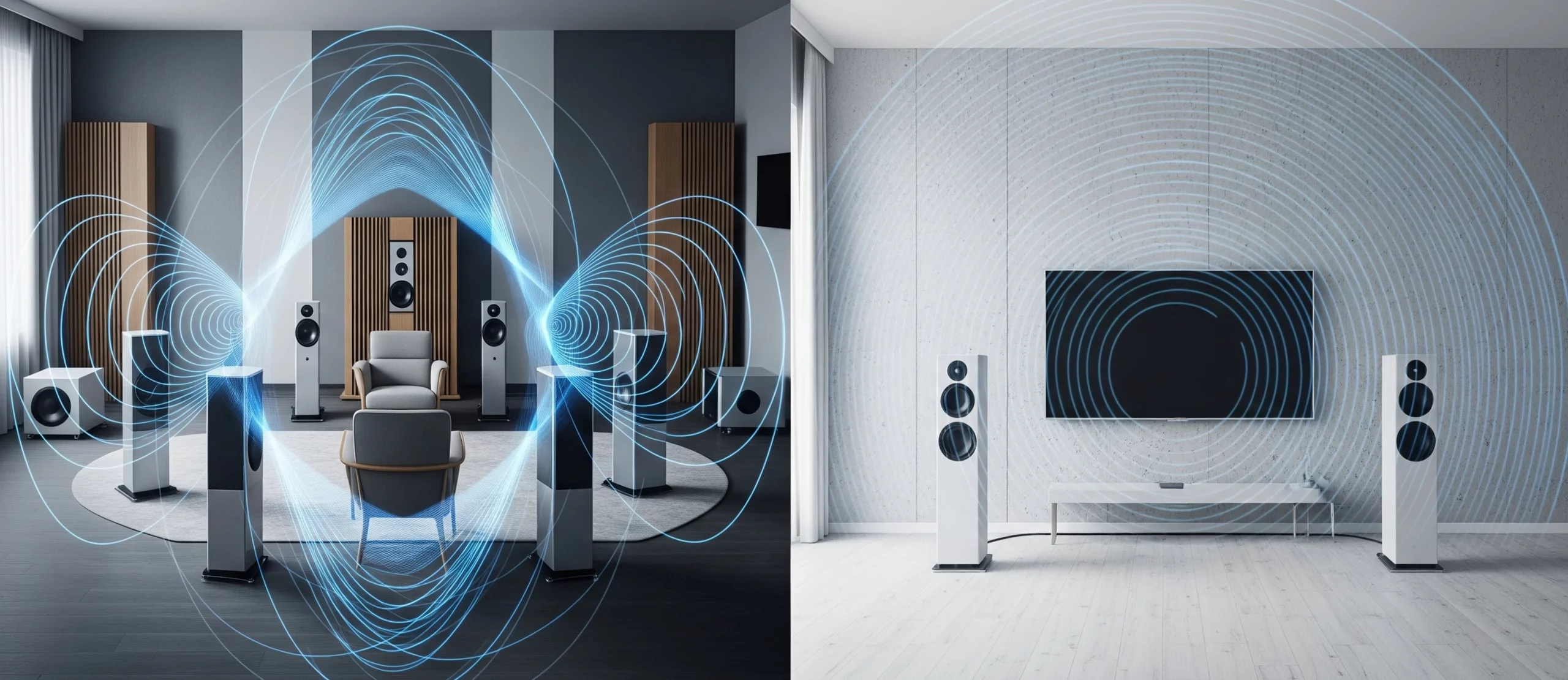
At the same time, when you invest time and money in multiple speakers, mixages, and calibrations, the system becomes more complex. That complexity comes at a real financial cost. Even a basic new surround sound setup often easily exceeds the budget for a good stereo pair and a subwoofer. For many people, spending hundreds or thousands of euros on additional speakers does not translate into a proportional increase in enjoyment.
On the other hand, human nature also plays a role. Sometimes, seeing others’ larger or more expensive equipment sparks a desire to imitate them, and that can lead to purchases driven by status rather than objective need. Before getting carried away by what “the neighbor has,” it’s worth asking yourself if the audio system you already enjoy is sufficient for your day-to-day needs. If the answer is yes, there’s no reason to embark on an investment that will also require time to install and calibrate. In the end, to each their own—and let’s not make such a big deal out of it.
How to Decide
First, assess whether the room is small or has areas that might interfere with the sound, since this reduces the actual surround sound effect. Think about how you’ll typically use the system. Will it be mostly for movies or music? For music, stereo is usually the best option.
Also consider your budget; add up the cost of speakers, a receiver, cables, and, if applicable, acoustic treatment; compare that to what you already have. If your goal is to impress others, keep in mind that personal satisfaction doesn’t always increase at the same rate as your spending. If your current system satisfies you for movies and TV shows, there’s no need to change it. On the other hand, if you’re looking to experience directional effects in specific titles and are willing to invest time and money in tuning your room, then a surround sound system might be worth it. In either case, the decision works best when it’s based on what you actually hear in your living room, not on what’s trendy.