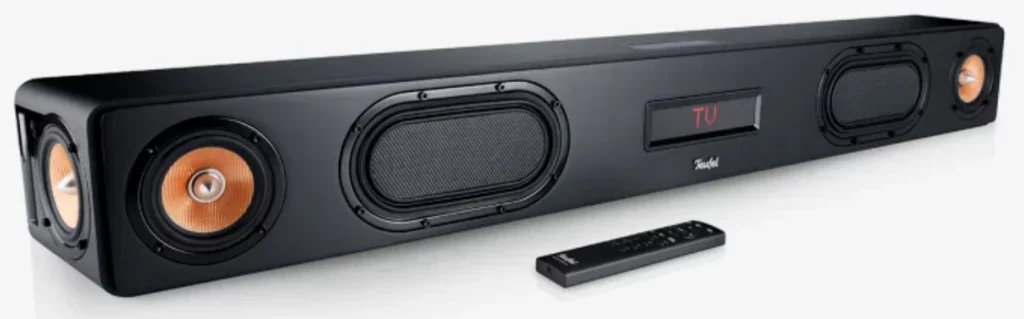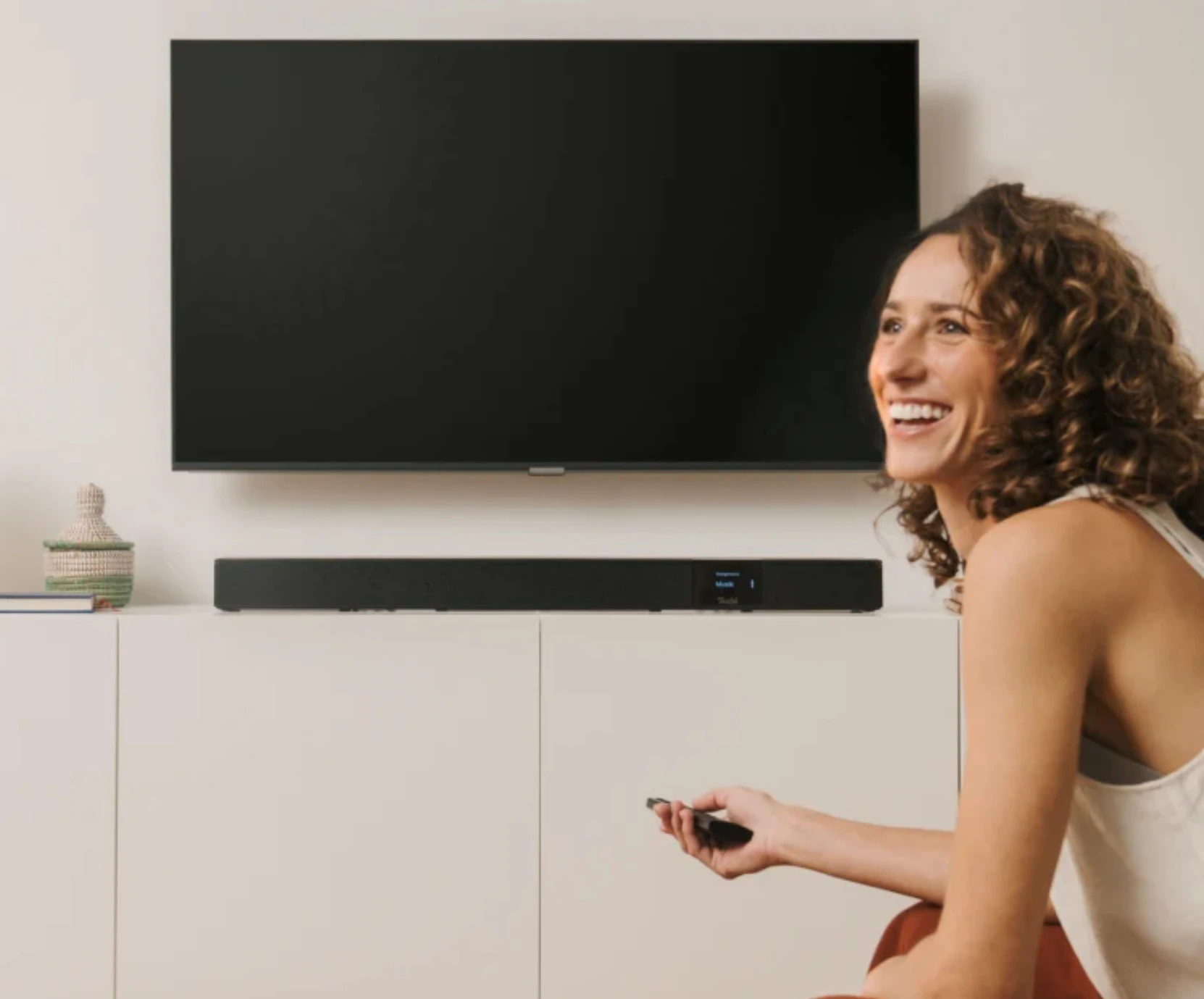
The thinner the screen, the worse the sound. This isn’t just an opinion. It’s physics. The industry has spent years perfecting panels that are barely thick at all, bezels that are almost invisible, and finishes that make the TV look like a painting. The problem is that this minimalist TV design has left no room for speakers, and sound quality suffers as a result. Teufel, the Berlin-based audio company with over 45 years of history, understands this very well and has shared its recommendations for anyone who wants to restore what the picture promises but the audio fails to deliver.
Why Do Flat-Screen TVs Sound So Bad?
The explanation is simple. The industry’s shift toward narrower bezels and slimmer bodies has eliminated the space for front-facing speakers in most models. What remains are small transducers that face downward or toward the back panel. The sound bounces off surfaces before reaching the listener, losing definition, and the bass is conspicuously absent. The result is that flat, lifeless sound that forces you to turn up the volume to make out the dialogue, which ultimately causes listening fatigue without actually improving clarity.
This is no minor issue. Many of today’s TVs excel in almost every technical aspect except for audio, precisely because the space available for internal speakers has been reduced to a minimum. High-end TVs with 4K resolution or OLED panels can deliver a spectacular picture, yet their sound quality doesn’t measure up to that picture.
Where to place the audio system so that it works
Before you buy anything, there are placement decisions that make all the difference. Teufel emphasizes that the sound system should be centered relative to the screen and, if possible, at ear level. A common mistake is placing the soundbar inside a closed cabinet or one with shelves above it. Physical obstacles scatter the sound waves and ruin sound propagation. Another key feature is the HDMI ARC connection, which allows the system to turn on and off in sync with the TV and be controlled with the same remote, hassle-free.
Dynamore technology, developed by Teufel, takes it one step further. Using side-firing speakers, the system widens the stereo soundstage and creates a truly immersive experience that far exceeds the physical dimensions of the device.
Teufel’s Options for Every Type of Living Room
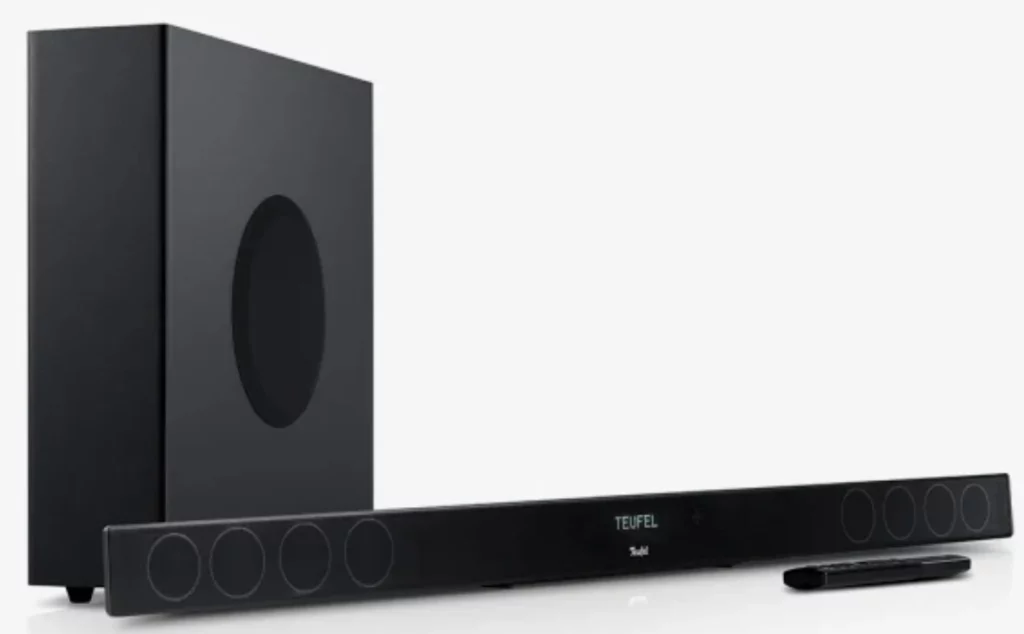
For medium-sized living rooms, the CINEBAR 11 is the brand’s flagship model. It features eight high-performance speakers and the T 6 wireless subwoofer, which can be placed upright or laid flat under the sofa. The system starts out as a 2.1 setup and can be wirelessly expanded to 4.1 by adding rear speakers, with no cables running through the room. The updated version adds support for virtual Dolby Atmos and HDMI connections with 4K pass-through and eARC.
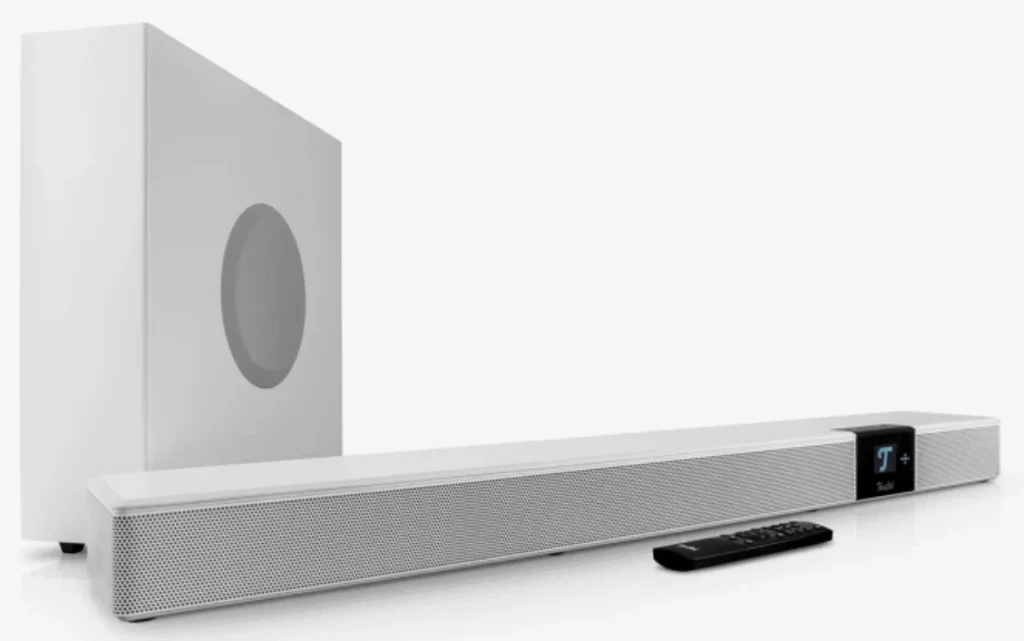
For those looking to take it to the next level, there’s the CINEBAR 22, a Dolby Atmos and DTS:X compatible 5.1 system designed for rooms up to 35 m². It features a dedicated center speaker in a coaxial configuration to ensure clear dialogue, side speakers that work with the room’s acoustics, and the option to expand to a 7.1 setup with the EFFEKT 2 wireless rear speakers. The starting price for the 5.1 system is 599.99 euros.
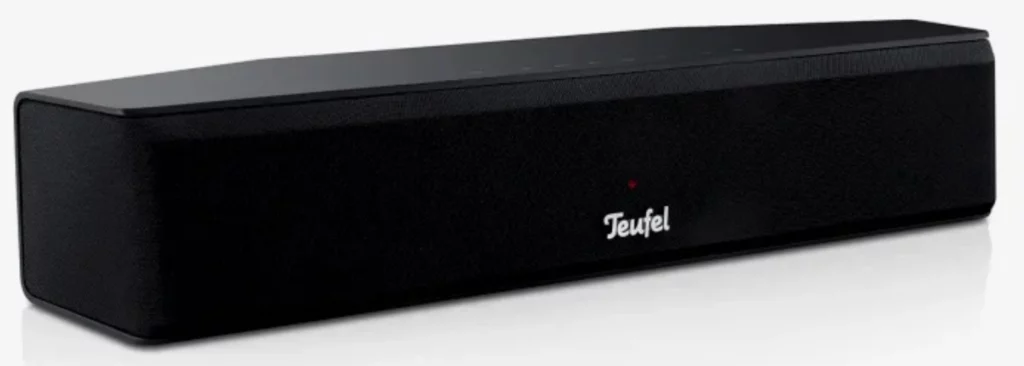
For smaller spaces, such as bedrooms or home offices, the CINEBAR ONE leverages Dynamore Ultra technology to deliver virtual surround sound in a compact design. It also includes a built-in USB sound card, allowing you to connect it to both a TV and a computer. At the other end of the spectrum, the CINEBAR ULTIMA features a built-in XXL subwoofer and delivers 380 watts of power without requiring any additional external devices. If you’re interested in more audio products from this brand, check out our roundup of Teufel audio options for more choices from their lineup.